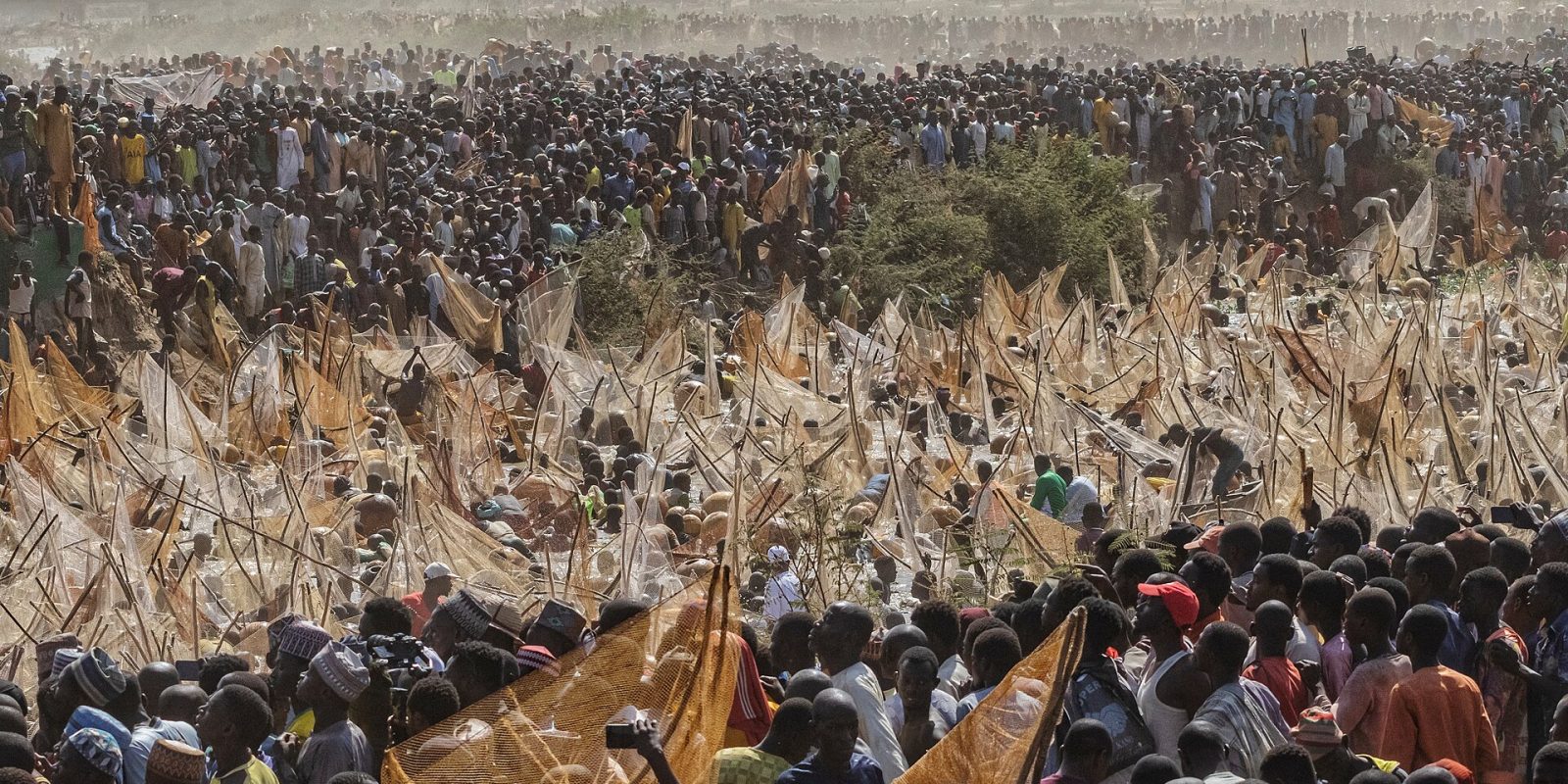
Thousands gather at the riverbank during the Argungu Fishing Festival. Photograph: Wikimedia Commons.
Oral History Archive
History is not only found in books and photographs. It lives in the memories of the people who were there. The DPLN Oral History Archive records the voices of elders, historians and eyewitnesses — so that the past can be heard in the words of those who lived it.
Our interviewers are collecting recordings across the country now. The entries below describe the interviews in progress. Audio recordings will be published here as they are recorded, transcribed and cleared for release — nothing on this page is presented as a recording until it has actually been made.
Interviews in Collection
Independence Day Memories — Lagos, 1960
Interviews being collected from Lagosians who were at the Racecourse on 1 October 1960, and from people across the country who remember the day Nigeria became free.
Voices of the Civil War, 1967–1970
Testimonies being collected from survivors, relief workers and soldiers on both sides of the war, recorded with care and respect for painful memories.
Market Women of Onitsha
Traders’ stories of commerce on the River Niger — of the great Onitsha market, the river trade, and how women built some of Nigeria’s most powerful trading networks.
The Railway Years
Retired railway workers on the Lagos–Kano line: the trains that knitted the country together, the stations, the journeys and the communities that grew up around them.
Music at the Shrine
Musicians, dancers and regulars on Fela Kuti’s Afrika Shrine in Lagos — the sound, the politics and the nights that made Afrobeat.
Farming and the New Yam Festival
Farmers, title holders and masquerade performers on the harvest traditions of the south-east — the farming year, the yam barns and the festival that gives thanks for it.
From the Archive
While the new recordings are being collected, here is a recording from the archive: Chinua Achebe interviewed on WOI-TV in 1968, speaking about Things Fall Apart and the writer’s role in a new nation. The film is in the public domain in the United States and is held on Wikimedia Commons.
Watch the 1968 Achebe interview on Wikimedia Commons
Know Someone We Should Interview?
If you know an elder, a historian or an eyewitness whose story should be recorded, please tell us through the User Contributions page, choosing “Oral history / interview” as the category.