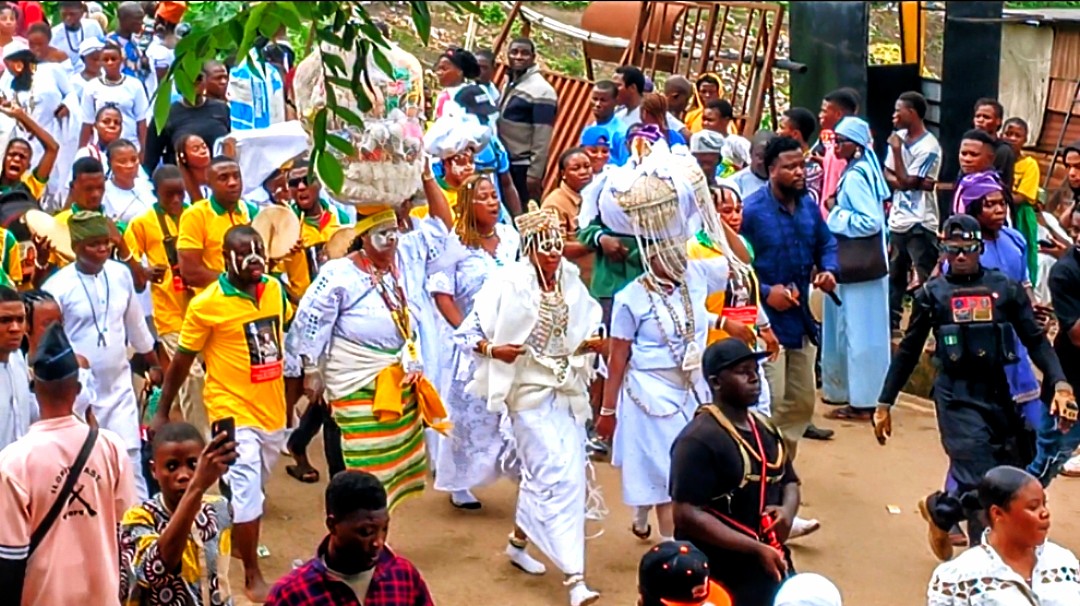
The Osun-Osogbo Festival, honouring Osun, the Yoruba goddess of fertility. Photograph: Wikimedia Commons.
Culture & Society
Nigeria is home to more than 250 ethnic groups, speaking over 500 languages — a diversity that shows itself in festivals, food, music and dress. This is the living culture that DPLN exists to record.
Ethnic Groups & Languages
Three groups dominate in number — the Hausa-Fulani of the north, the Yoruba of the south-west and the Igbo of the south-east — but Nigeria is far more than its “big three”. The Edo of Benin City, the Tiv of the Middle Belt, the Ibibio and Efik of the south-south, the Kanuri of Borno, the Nupe, the Igala, the Ijaw of the Delta and hundreds of smaller peoples each keep their own language, customs and history. English is the official language, and Hausa, Igbo and Yoruba are the major national languages.
Festivals & Traditions
The Argungu Fishing Festival in Kebbi State is one of Africa’s great spectacles: thousands of fishermen wade into the Sokoto River with hand-woven nets and calabashes, competing to catch the biggest fish in a tradition said to date back centuries.
The Osun-Osogbo Festival is held each August at the sacred grove of the goddess Osun in Osogbo. The grove — a forest of shrines and sculptures, inscribed by UNESCO as a World Heritage Site in 2005 — draws tens of thousands of devotees and visitors. The New Yam Festival, celebrated by Igbo communities in August and September, gives thanks for the yam harvest with masquerades, dances and feasting. Other great festivals include the Durbar of the northern emirates, the Eyo festival of Lagos and the Ofala of Onitsha.
Cuisine
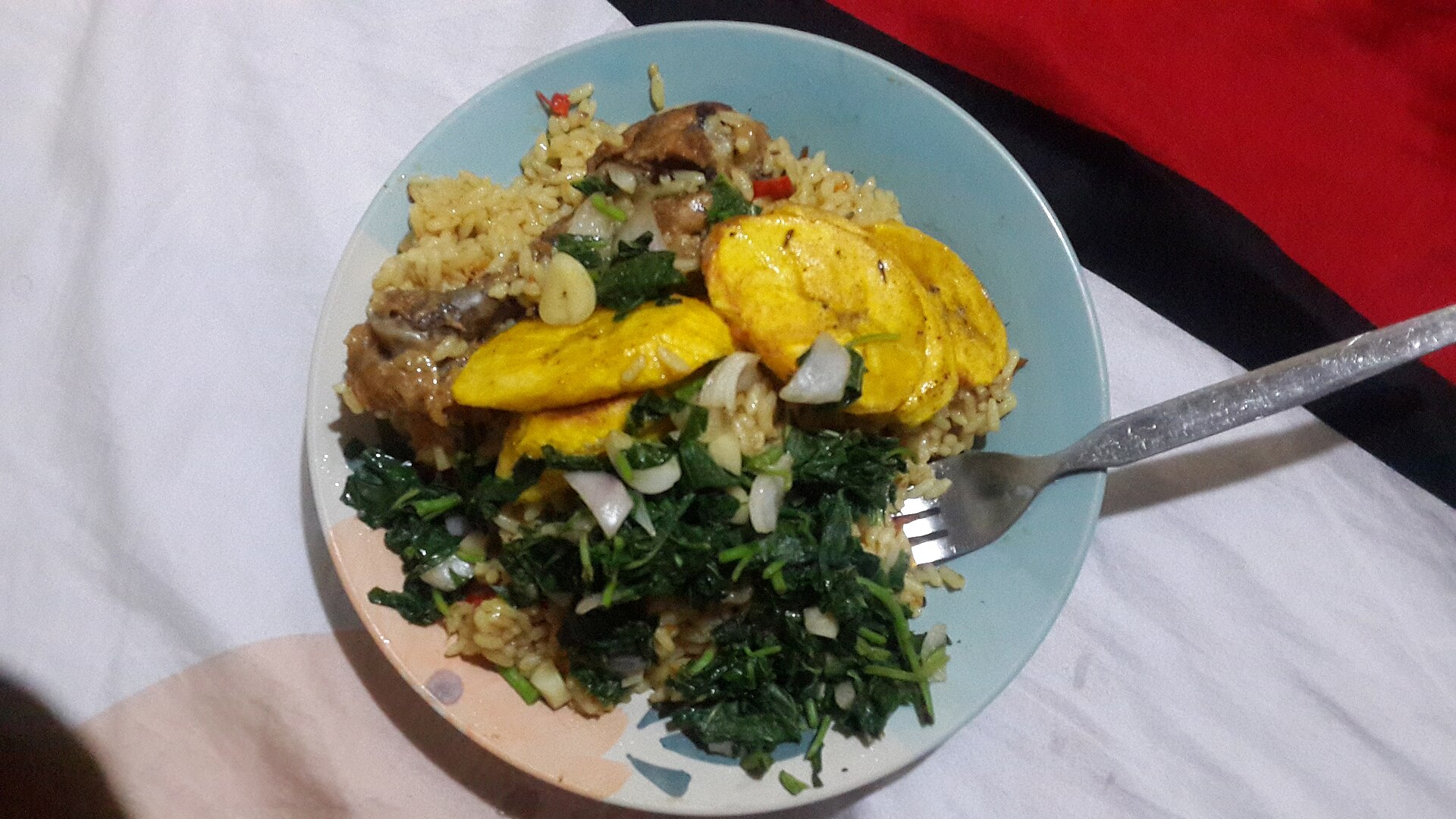
Nigerian food is bold, spicy and generous. Jollof rice — rice cooked in a rich tomato and pepper base — is the dish of parties and celebrations, and the subject of a good-natured rivalry with Ghana. Pounded yam, served with egusi soup or bitter-leaf soup, is the classic meal of the south; suya, spicy grilled meat sold at roadside stalls, is the north’s gift to the nation’s evenings. Add akara (bean cakes), ofada rice, pepper soup and the fish dishes of the Delta, and you have one of the world’s great cuisines.
Music & Arts
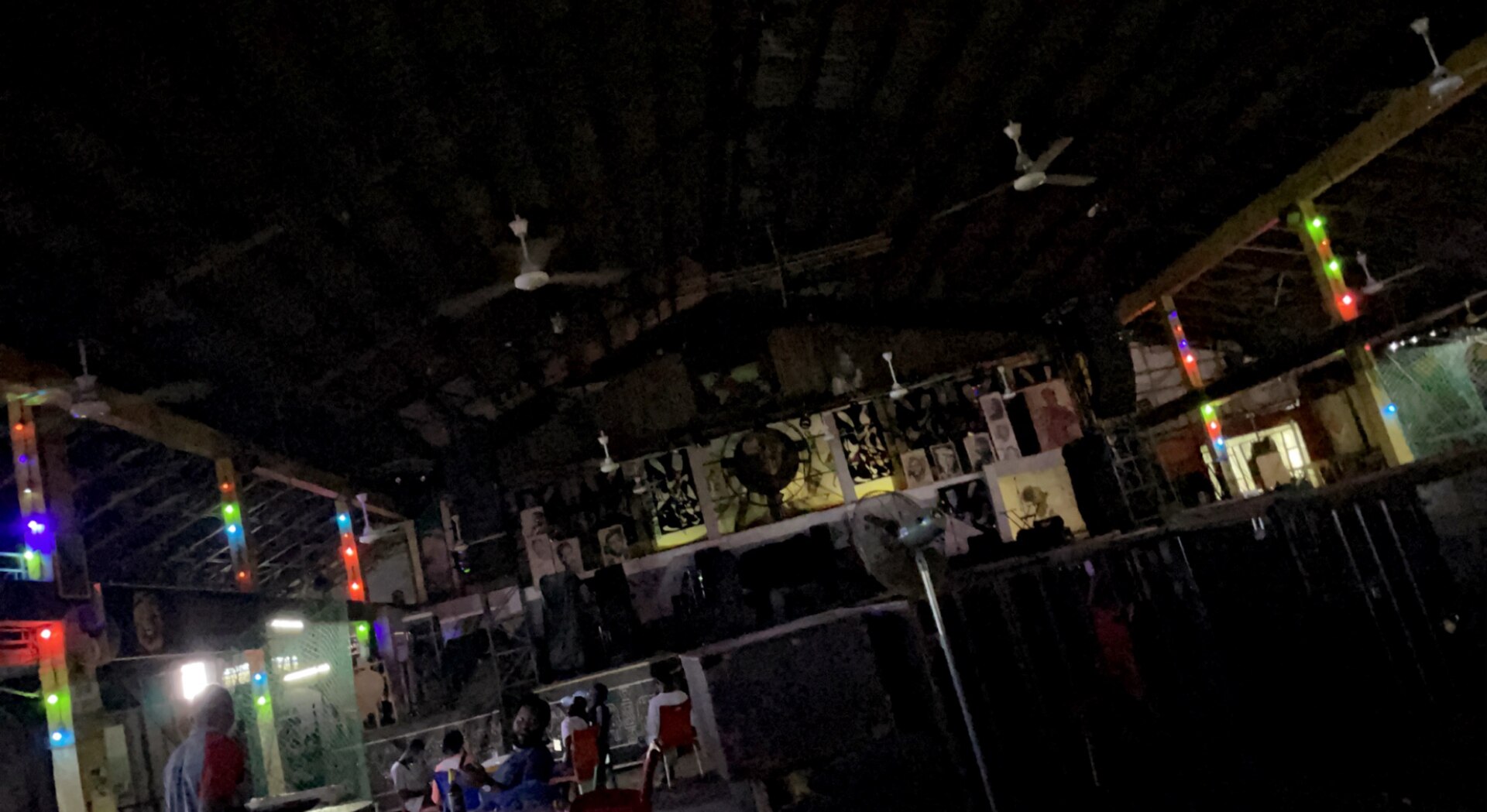
Fela Kuti created Afrobeat in the 1970s — a fusion of highlife, jazz and funk with lyrics that attacked military rule and corruption. From his Kalakuta Republic and the Afrika Shrine in Lagos, he became one of Africa’s most important musicians and one of its most fearless critics. His son Femi and grandson Made carry the sound on today.
The tradition continues: King Sunny Adé took jùjú music around the world in the 1980s, and today’s Afrobeats stars — Burna Boy, who won the Grammy for Best Global Music Album in 2021, Wizkid, Davido and Tems — fill stadiums on every continent.
In literature, Chinua Achebe’s Things Fall Apart (1958) is the most widely read African novel ever written. Wole Soyinka won the Nobel Prize in Literature in 1986 — the first African to do so. A new generation, led by Chimamanda Ngozi Adichie, has carried Nigerian writing to the top of world literature. In the visual arts, the bronze casters of Benin, the textile artists of Abeokuta and the contemporary painters and sculptors of Lagos continue a tradition that is thousands of years old.