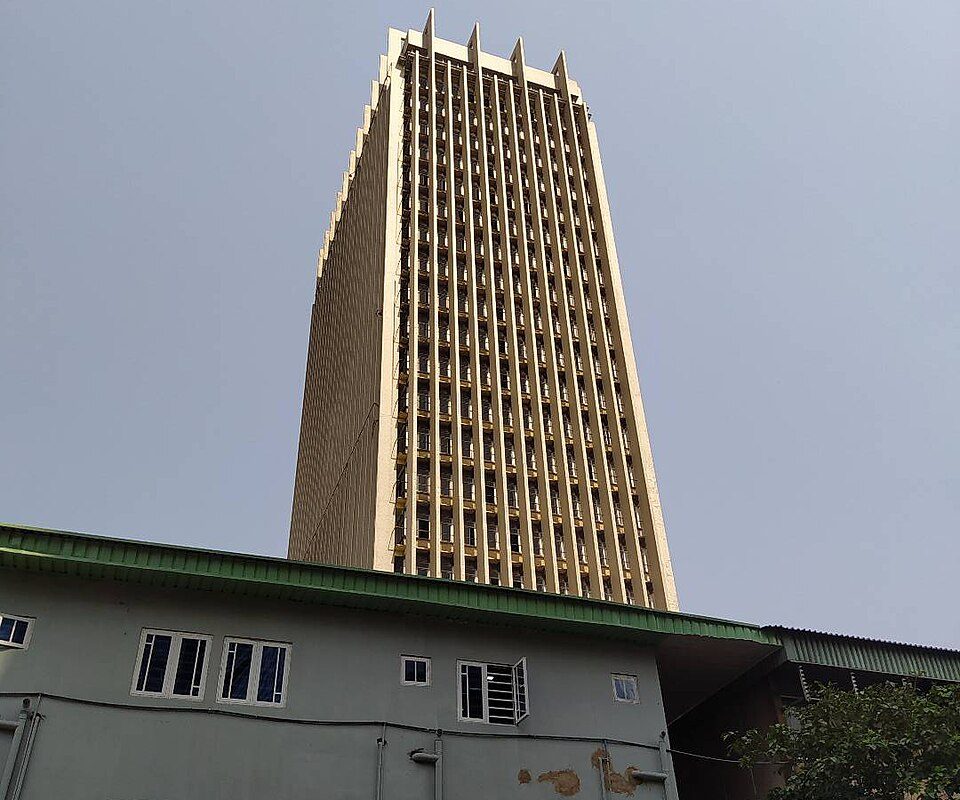
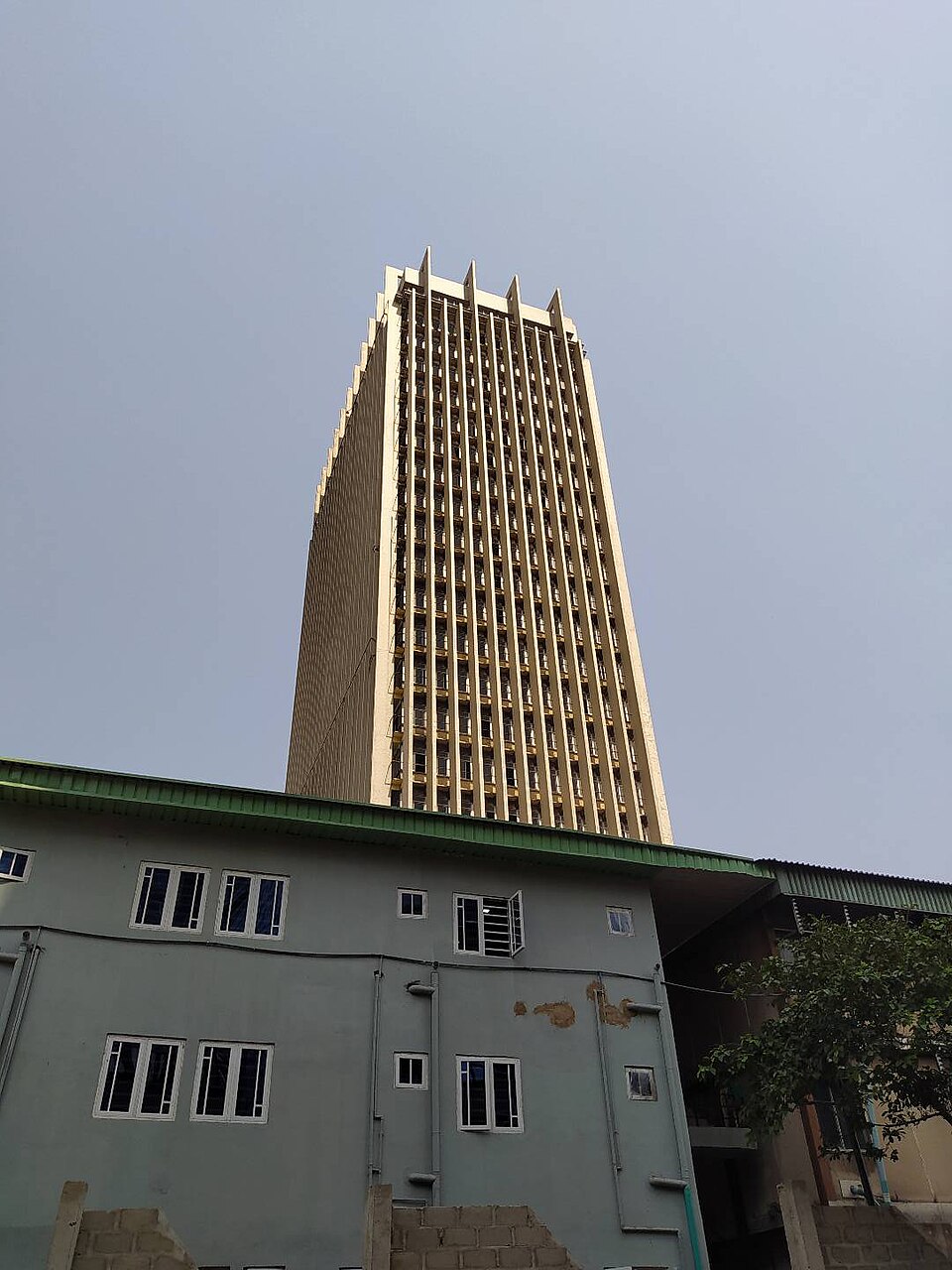
Independence House, Lagos — commissioned by the British as a goodwill gesture for independence. Photograph: Wikimedia Commons.
Independence & First Republic (1960–1966)
On the morning of 1 October 1960, at the Racecourse in Lagos, the Union Jack was lowered and the green-white-green flag of Nigeria was raised for the first time. After a century of colonial rule, Africa’s most populous country was free — and the world watched.
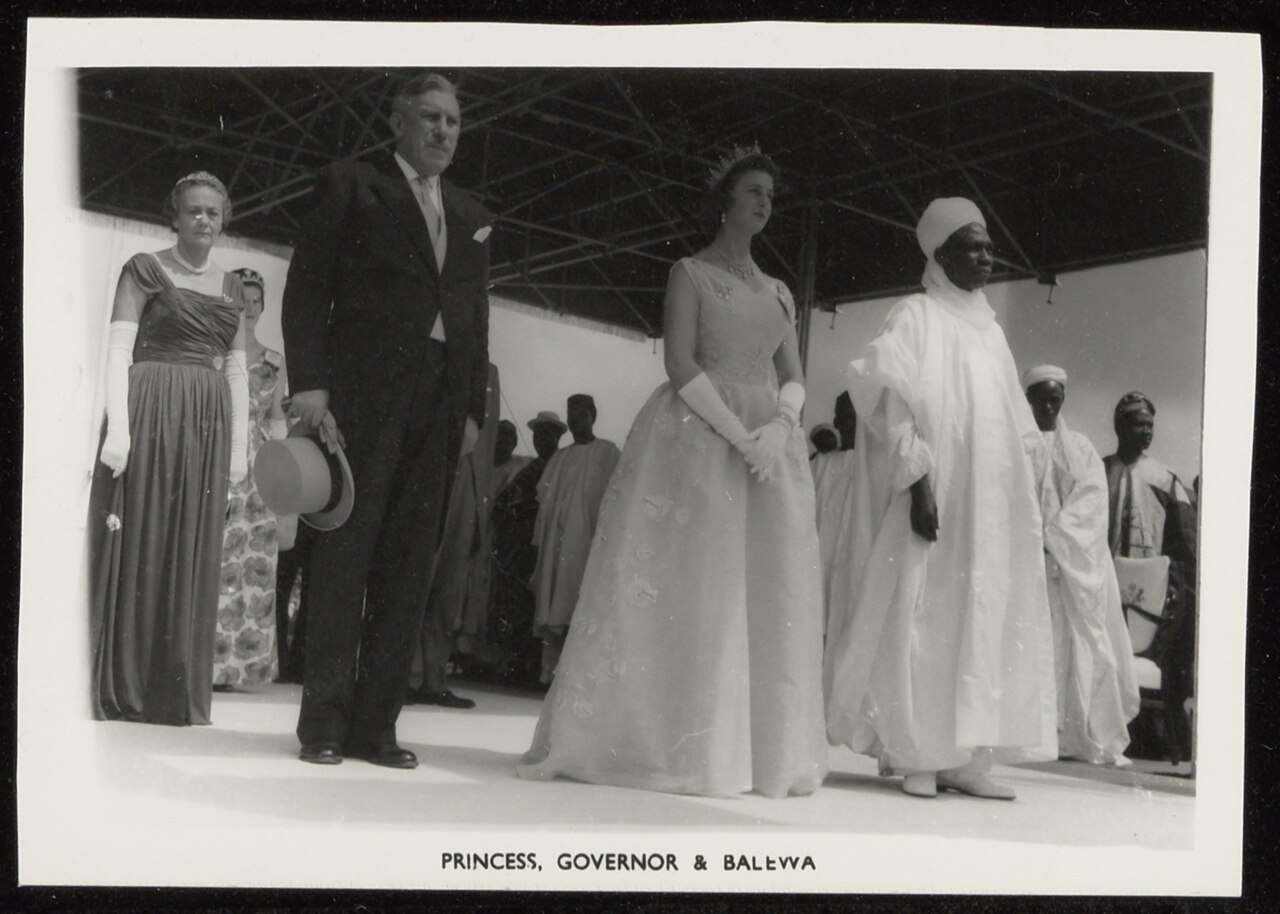
Independence Day: October 1, 1960
The celebrations lasted for days. There were parades and fireworks, church services and mosque prayers, and crowds in Lagos and across the country. The flag itself was the work of a young student, Michael Taiwo Akinkunmi, whose design — green for the land’s wealth, white for peace, green again — won a national competition.
Prime Minister Sir Abubakar Tafawa Balewa told the crowds that Nigeria was “called upon to take its place among the free nations of the world”. Princess Alexandra represented Queen Elizabeth II, and Nnamdi Azikiwe stood as Governor-General of the new federation. Independence House, the 25-storey building commissioned by the British as a goodwill gesture, towered over the celebrations on Lagos Island.
Political Structure: Federalism and Regional Governments
The new Nigeria was a federation: three powerful regions — Northern, Western and Eastern — plus the Federal Territory of Lagos. Each region had its own premier, parliament and civil service, and controlled much of its own affairs. It was a system designed for a country of great diversity — but it also meant that politics was organised by region, and that the regions competed fiercely for power at the centre.
The premiers were the real powers of the early republic: Ahmadu Bello in the North, Obafemi Awolowo (later succeeded by Samuel Akintola) in the West, and Michael Okpara in the East. In 1963 Nigeria became a republic, cutting its last formal tie to the British Crown, and Azikiwe became its first president.
Key Figures
Nnamdi Azikiwe — journalist, nationalist and first President of Nigeria. His newspaper, the West African Pilot, had carried the case for independence to a generation, and he remained the country’s most respected elder statesman for decades.
Sir Abubakar Tafawa Balewa — the first Prime Minister. A schoolteacher from Bauchi who became the calm, dignified face of the new nation abroad, he led the federal government until his death in the coup of January 1966.
Obafemi Awolowo — Premier of the Western Region and the great advocate of free primary education, which he introduced in the west in 1955. His vision of development through education shaped Nigerian public life for half a century.
Ahmadu Bello, the Sardauna of Sokoto — Premier of the Northern Region and the dominant political figure in the north. He built the north’s civil service and university, and held the federation’s fragile balance together until he was killed in the same January 1966 coup.
The First Republic lasted only five years. Disputed federal elections in 1964, a violent political crisis in the Western Region, and a census that neither side trusted destroyed public confidence. On 15 January 1966, young army majors struck — and the republic fell.