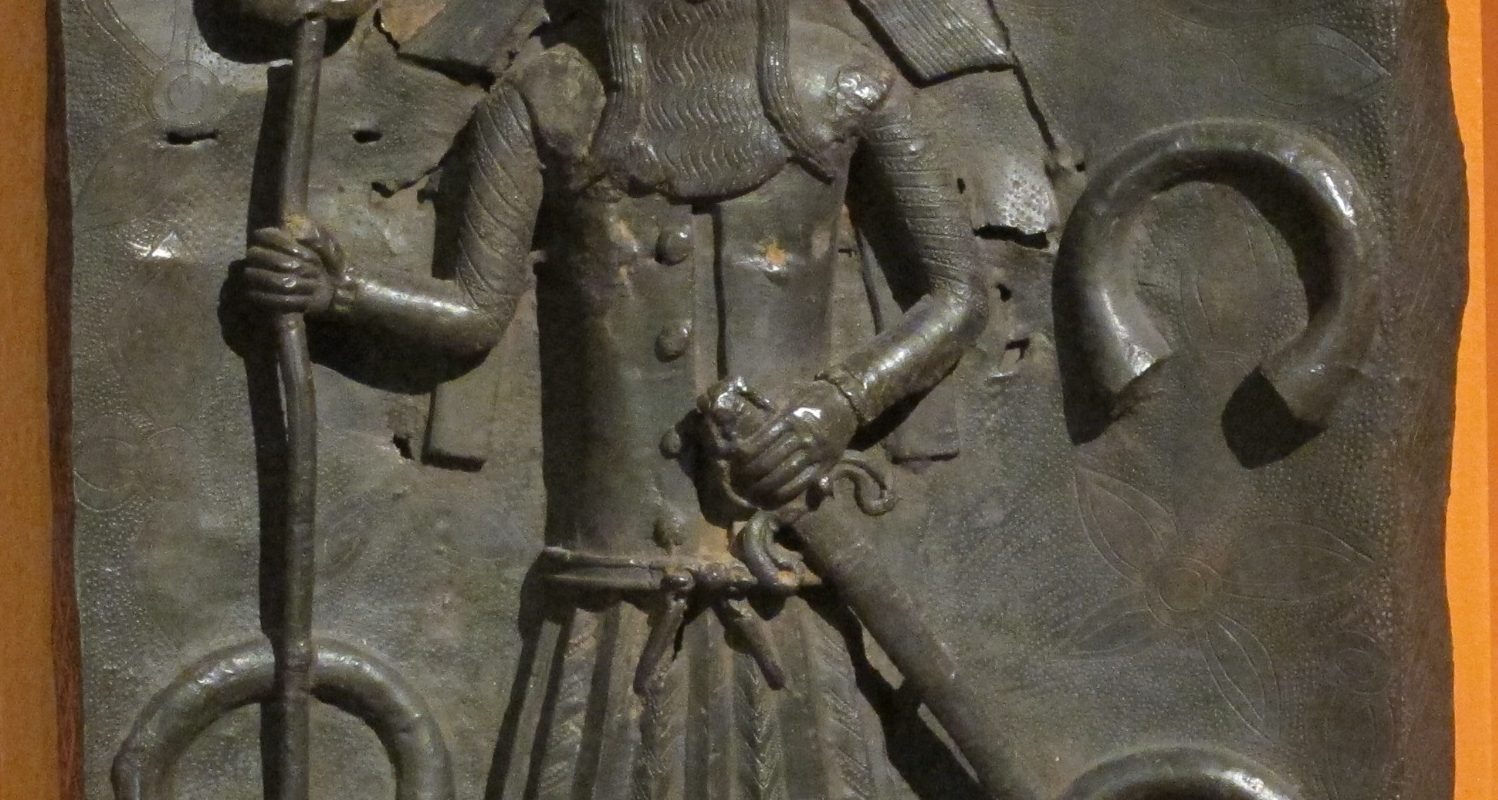
Benin bronze plaque depicting a Portuguese soldier, 16th–17th century. Photograph: Wikimedia Commons.
Ancient & Pre-Colonial Nigeria
Nigeria’s history begins long before 1960 — and long before the name “Nigeria” existed. For more than two thousand years, the peoples of this land built kingdoms, traded across the Sahara, farmed the forests and savannahs, and created art that still astonishes the world today.
Early Civilizations
The Nok culture flourished on the Jos Plateau from around 1000 BC to about AD 500. Its artists modelled lifelike terracotta heads and figures — the oldest figurative sculpture known in sub-Saharan Africa — and its people were among the earliest iron-smelters on the continent.
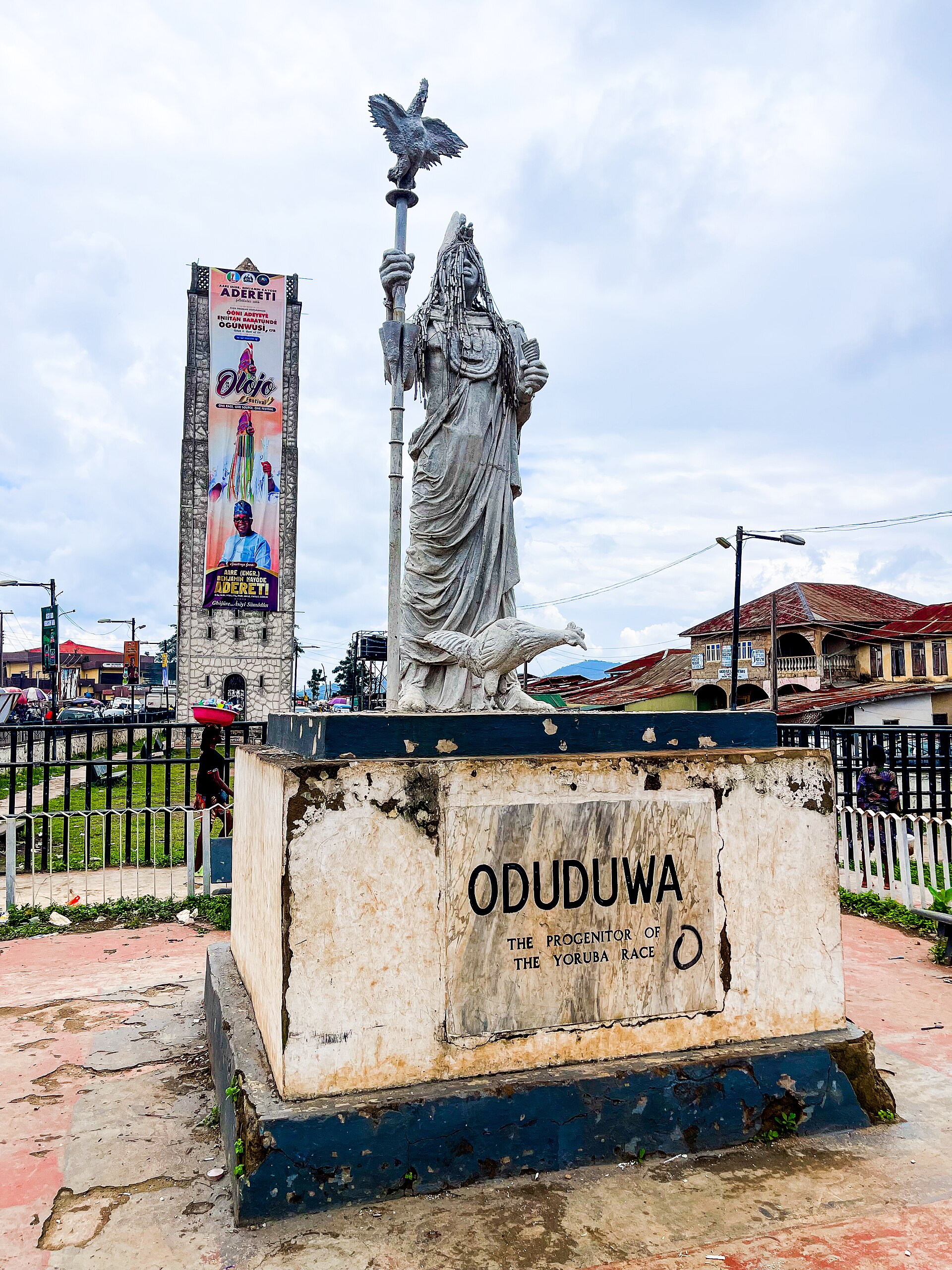
Ife, the spiritual home of the Yoruba people, rose to prominence from the 11th century. Its artists cast naturalistic brass and bronze heads by the lost-wax method, works of such skill that early European scholars refused to believe they were African-made. According to Yoruba tradition, the world itself began at Ile-Ife, where Oduduwa founded the first Yoruba kingdom.
The Benin Kingdom, ruled by the Oba from Benin City, grew from the 13th century into one of West Africa’s great states. Its court artists produced the famous Benin Bronzes — brass plaques and carved ivory heads that recorded the kingdom’s history and honoured its kings. In 1897 a British expedition looted the palace; the bronzes are now scattered in museums around the world, and their return is a live question in Nigeria today.
The Oyo Empire dominated the Yoruba south-west in the 17th and 18th centuries. Ruled by the Alaafin, and famed for its cavalry, Oyo controlled trade routes to the coast and built a political system that balanced the king against a council of chiefs. Its successor states carried Yoruba language, religion and art across West Africa and the Atlantic world.
Trade & Economy
Long before European ships arrived, the peoples of the north were part of the great Trans-Saharan trade. Caravans crossed the desert carrying kola nuts, leather goods, textiles and enslaved people north, and bringing salt, horses and metalware south. The trading cities of Kano and Katsina, and the empire of Kanem-Borno around Lake Chad, grew rich on this commerce.
Agriculture was the foundation of life everywhere. Farmers in the south grew yams, cocoyams and oil palm; in the drier north, millet and sorghum. Fishing thrived along the Niger and Benue rivers and the creeks of the Delta, and craftspeople worked as blacksmiths, weavers, dyers and potters — skills that survive in Nigerian markets today.
Cultural Heritage
The art of ancient Nigeria was never decoration alone. The terracotta of Nok, the bronze heads of Ife and the plaques of Benin were records of kings, gods and history, kept in palaces and shrines. Oral traditions carried the rest: praise poetry, proverbs and the Ifa divination verses of the Yoruba preserved genealogy, law and philosophy without writing.
Religion before colonialism was woven into daily life. The Yoruba honoured the Orishas — gods such as Shango, god of thunder, and Ogun, god of iron. The Igbo held to the worship of Chukwu and the earth goddess Ala, and to the authority of ancestors. In the north, Islam had spread from the 11th century and was established as the faith of the Sokoto Caliphate after 1804. Together, these traditions formed the deep roots from which modern Nigeria grew.